


Japanese Calligraphy
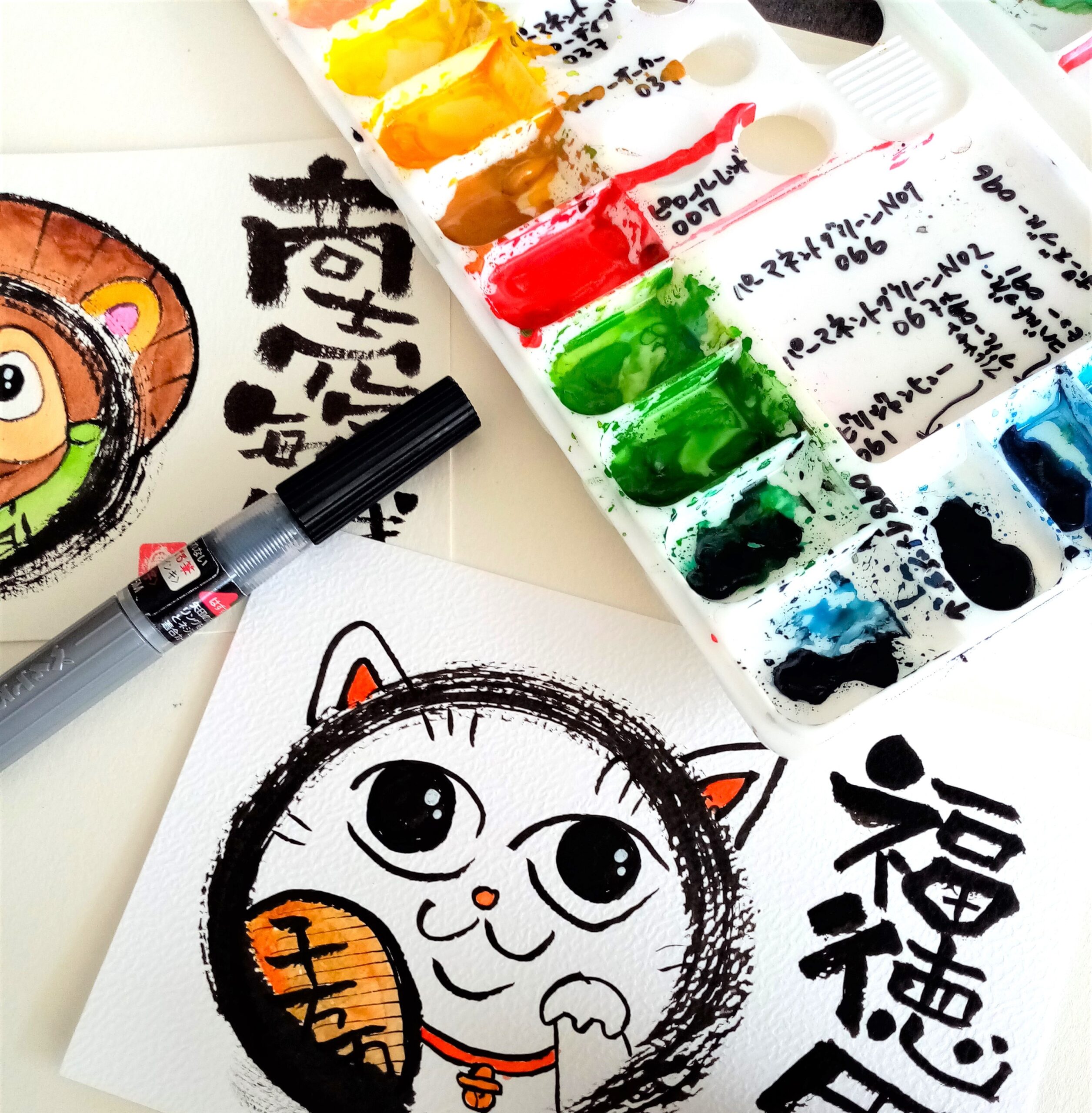
Japanese calligraphy, also known as shodō or the way of writing, is a traditional art that combines technique, concentration and harmony with oneself and the surrounding space.
Japanese Calligraphy Workshops
書道
Japanese calligraphy, also known as shodō or the way of writing, is a traditional art that combines technique, concentration and harmony with oneself and the surrounding space.
Drop-in classes
No events for now.
Weekly classes
| Monday | Tuesday | Wednesday | Thursday | Friday | Saturday | |
|---|---|---|---|---|---|---|
AGJA
45 avenue de la République, 33200 Bordeaux
|
Princing & Registration
| Matsukaze membership fee* (25 €) | ALG classroom membership fee** (20 €) | Pricing & Registration | |
|---|---|---|---|
|
|
260€ (price of registration : 2 thursdays a month, from september to june)
Register
|
||

|
Redirection to their website :
Register
|
||

|
See in the Tea Shop's website
Register
|
* The Matsukaze fee is an annual membership to the association — shared across all the association's activities (you only pay once).
** The ALG fee lets us offer you a private, dedicated classroom!
Class
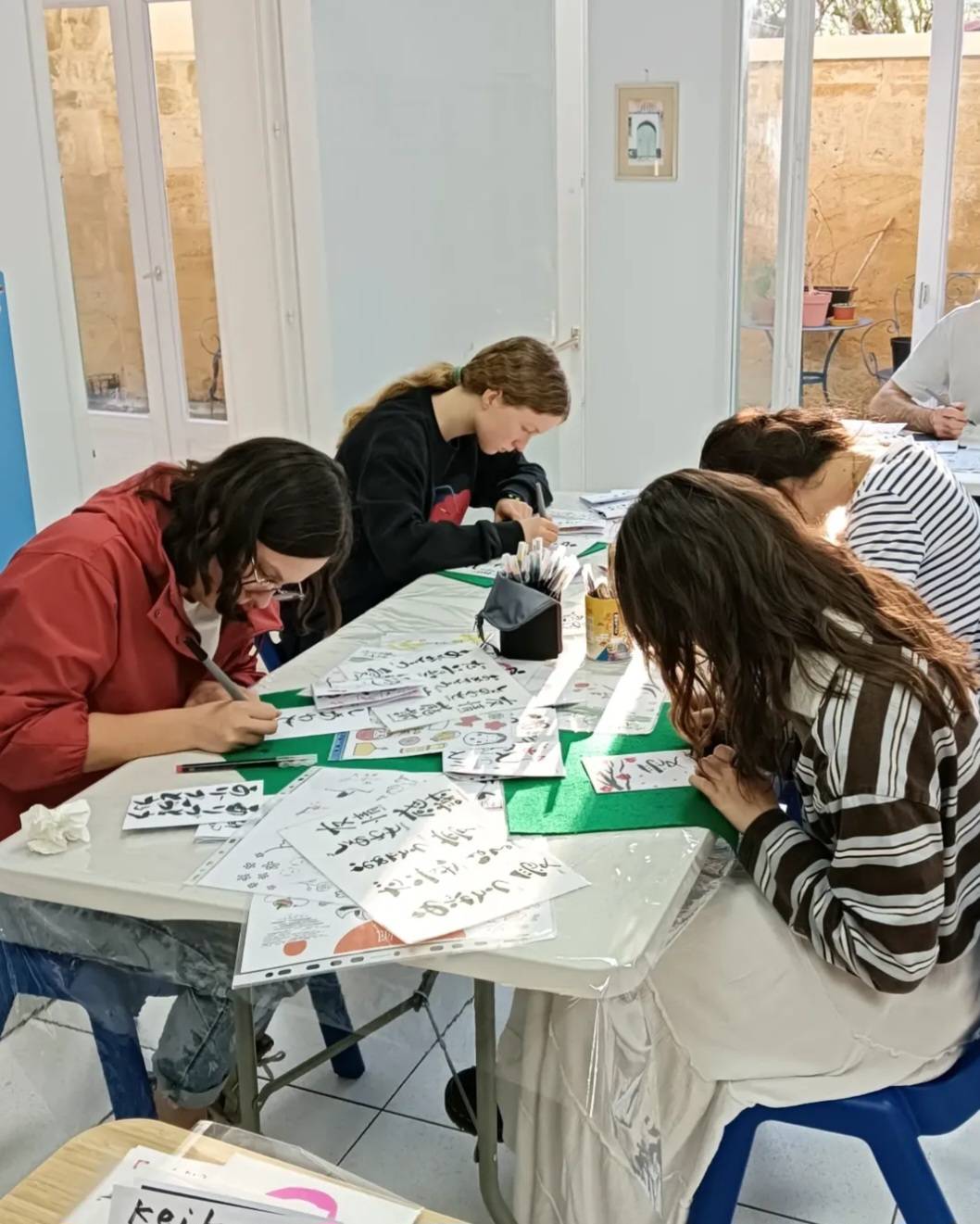
Have you ever wanted to write beautifully? Come and discover Japanese calligraphy, where dexterity and beauty are at the heart of the practice.
Calligraphy cultivates qualities that extend far beyond the artistic realm.
Concentration, control of gesture, spatial awareness, patience, trust in imperfection: these are all resources you carry with you long after the session.
Using a brush and black Japanese ink, you will be guided to write the kanji of your choice, to take home with you afterwards.
The opening bow: the session begins with a collective bow. A simple gesture that marks the transition from the outside world to the practice space, and invites everyone to leave their worries at the door.
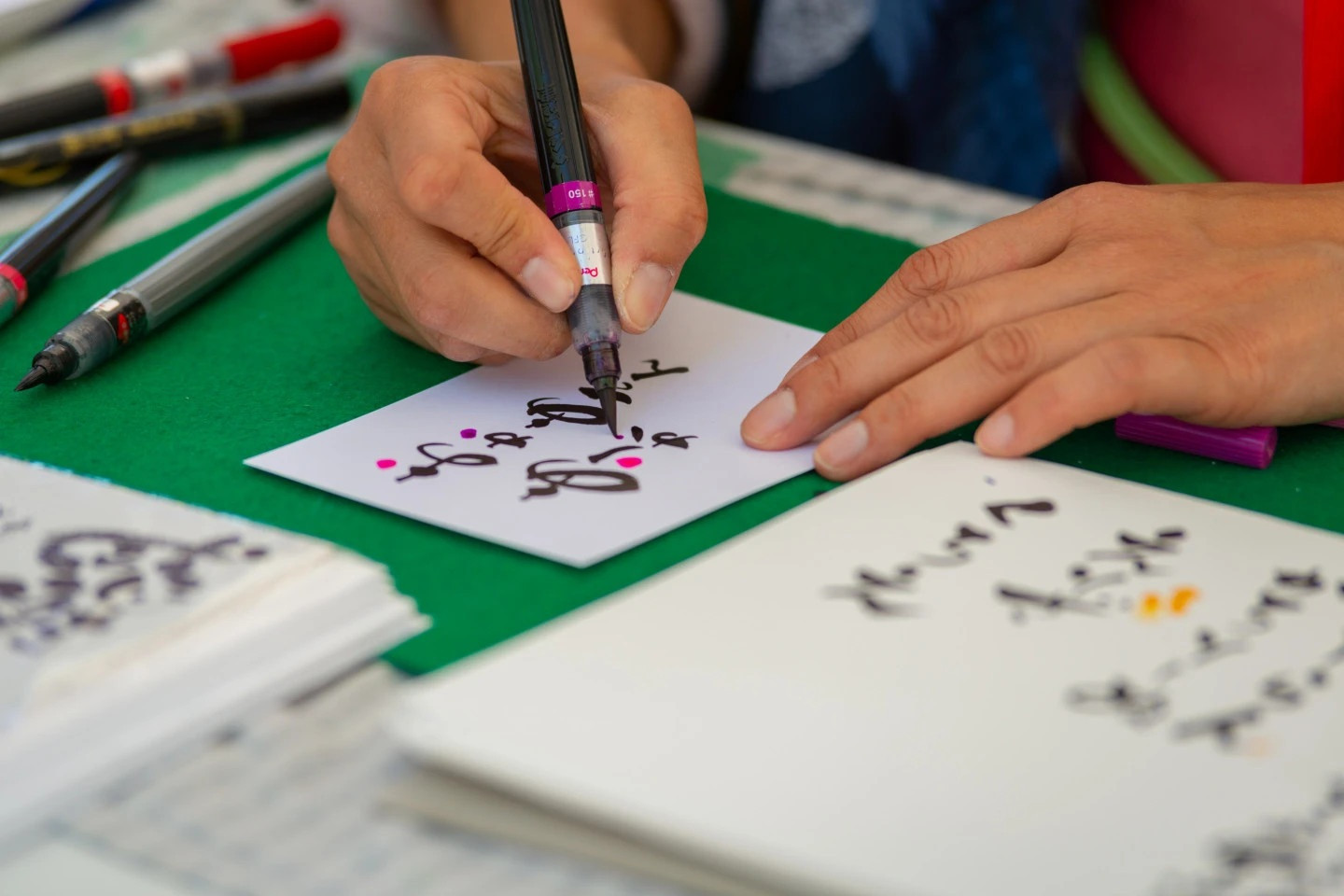
Preparing the ink: grinding the ink yourself on the ink stone (suzuri) is an invitation to slow down. This moment of preparation is not a formality: it is already part of the practice.
Posture and breathing: before writing, we settle in. The teacher guides posture, paper positioning and brush hold. We breathe. We wait until we are ready.

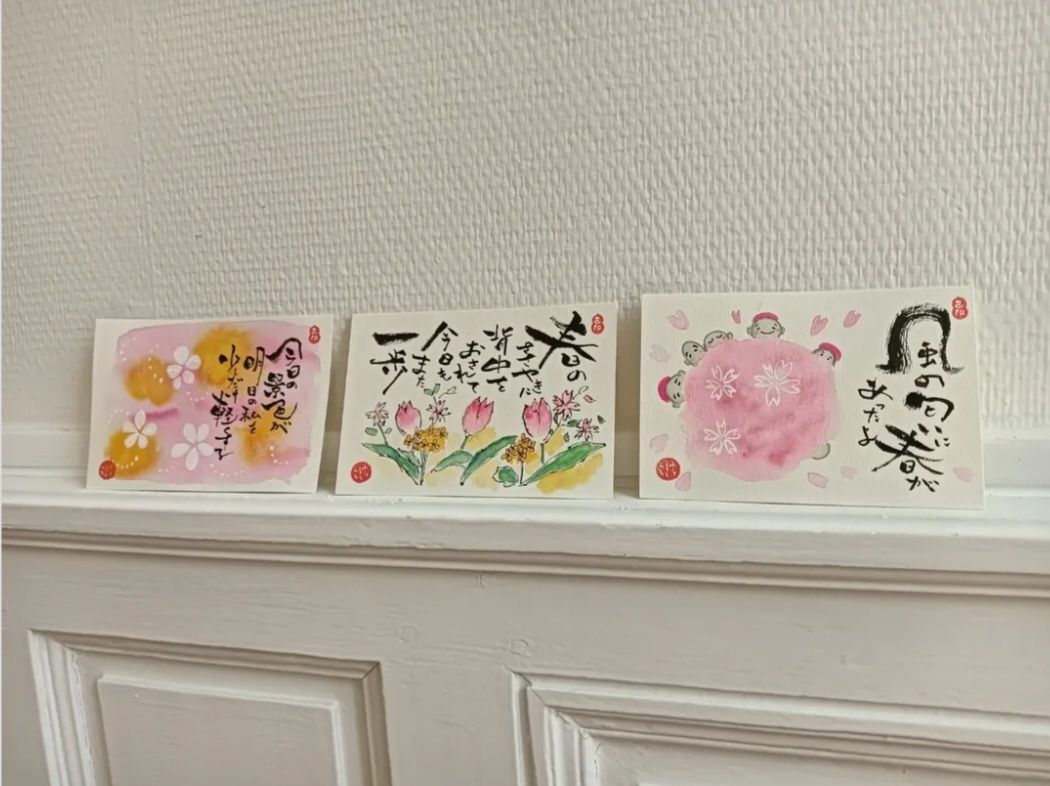
Exercises and creation: we work on one or more characters, first by imitating the master’s model, then gradually making room for personal expression. We create, we observe, we begin again without judgement.
The closing bow: the session ends as it began: with respect. A bow to partners, to the teacher, to the space. You leave a little different, a little calmer, a little more attentive.
Patience is the guiding principle of this art. One must never rush, always remaining calm even in the face of mistakes, in order to achieve a satisfying result. Like any discipline, Japanese calligraphy is rooted in personal development and the refinement of our gestures, our use of space within our environment, and the mastery of breathing.
Teachers

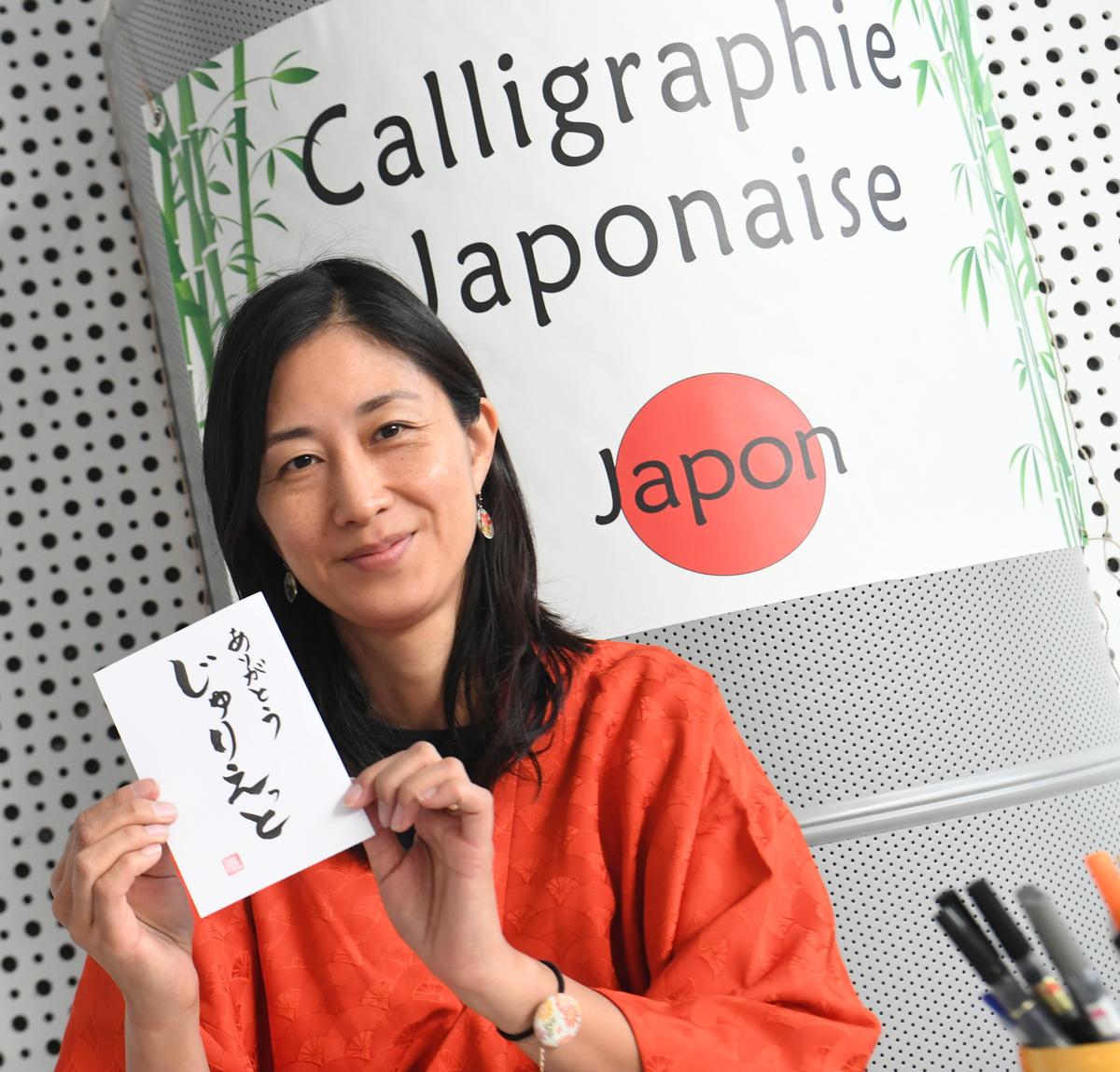
Keiko Onishi
Tea Ceremony Master, Calligraphy Master and Japanese teacher.
Born and raised in Tokyo, she developed a passion for Japanese culture from a very young age. After meeting her Tea Ceremony master in middle school, she decided to begin studying this art.
After years of practising Chanoyu (Tea Ceremony), as well as Ikebana (flower arrangement), Kitsuke (Kimono art), Japanese calligraphy, Japanese cuisine, the art of Wagashi (traditional Japanese confectionery) and the Japanese language, she settled in France to share her rich and unique experience and philosophy of a culture she deeply cherishes.
Gallery
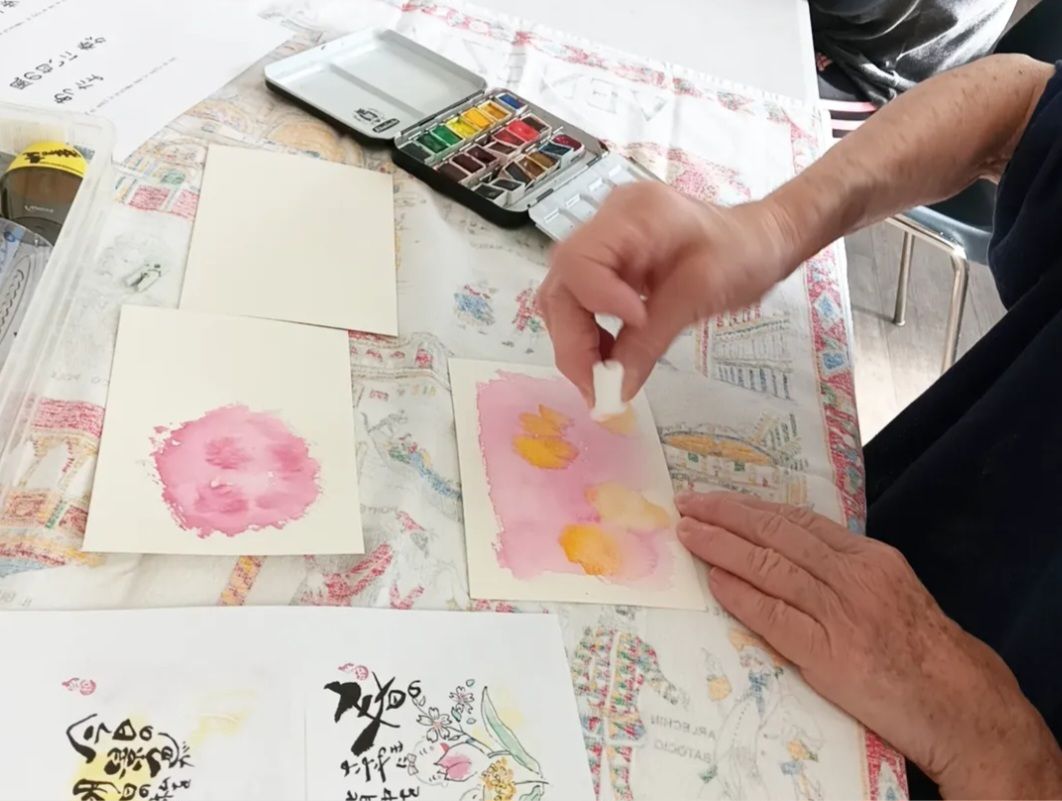
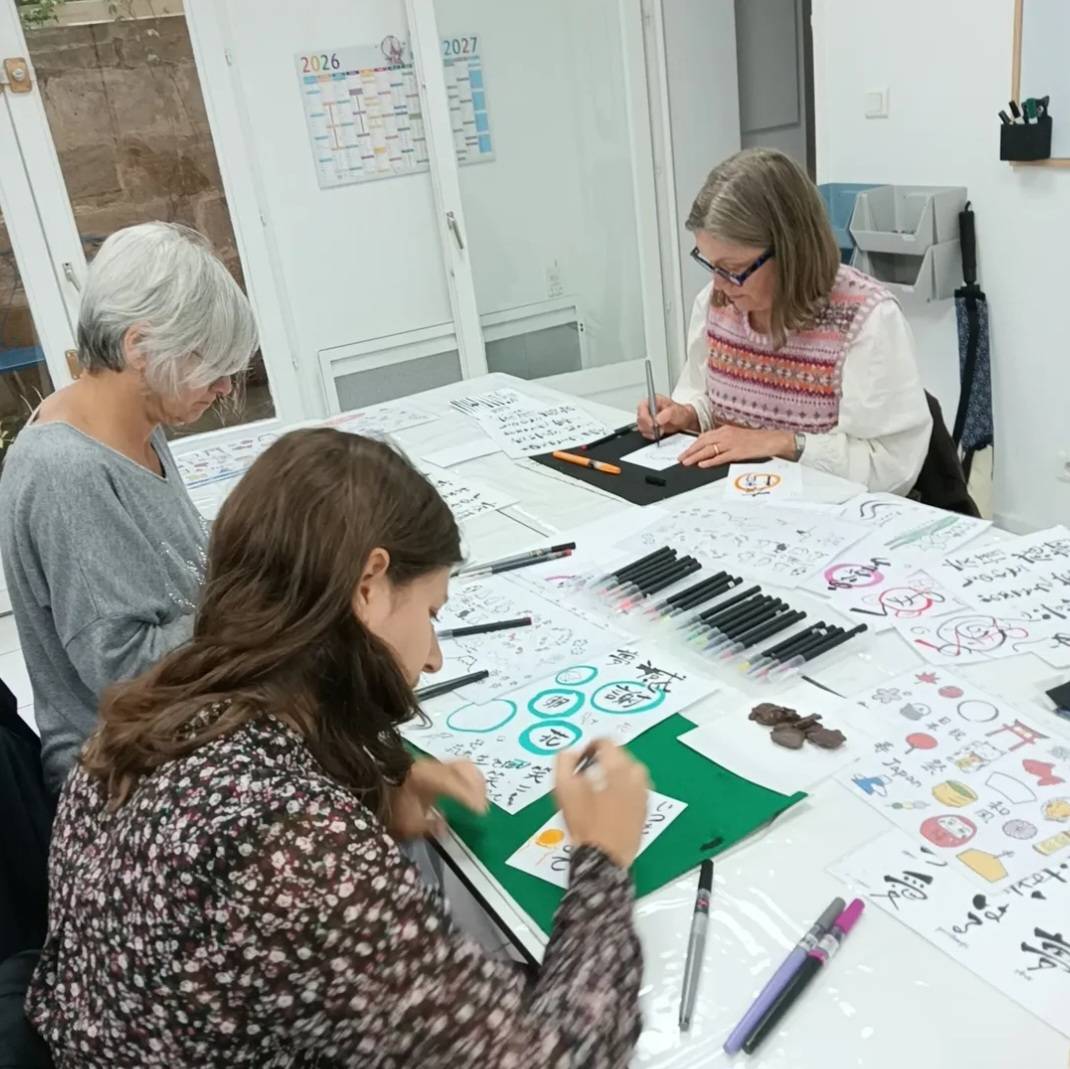
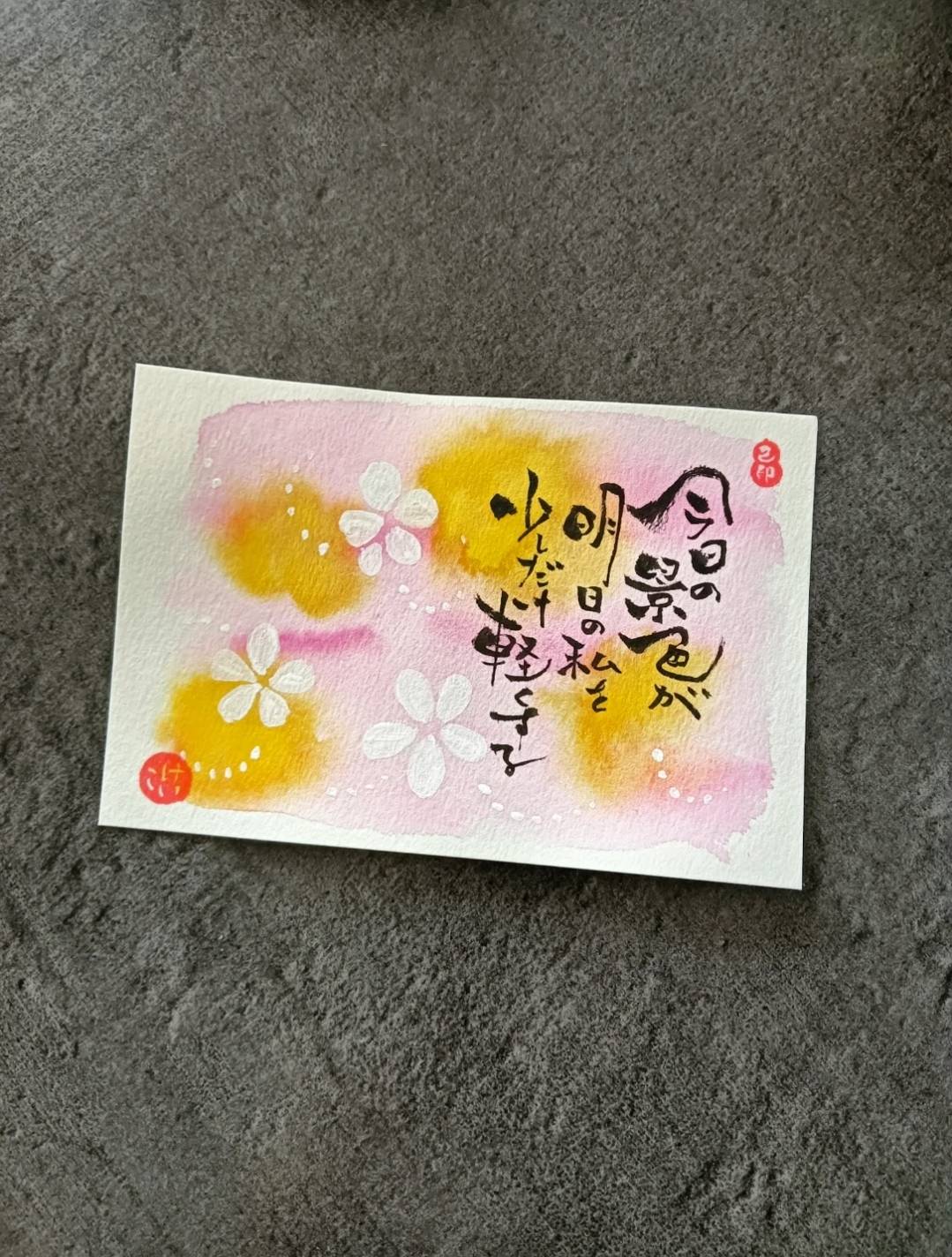
Japanese Calligraphy History
- Japanese Calligraphy HistoryJapanese calligraphy, known as Shodō (書道) — literally “the way of writing” — is an art in its own right, distinguishing itself from Chinese calligraphy through its Zen influence and its two syllabaries: hiragana and katakana. The principle is simple: emptying the mind in order to write Japanese characters using a brush and a black… Read more: Japanese Calligraphy History
Q&A
- Japanese Calligraphy: Q&AFrom what age can one practice? Children can start from the age of 8 or 10, with a fun and visual approach. Adults find it an artistic and meditative practice, ideal… Read more: Japanese Calligraphy: Q&A