
Discover all workshops for 2025-2026!


Japanese calligraphy, known as Shodō (書道) — literally “the way of writing” — is an art in its own right, distinguishing itself from Chinese calligraphy through its Zen influence and its two syllabaries: hiragana and katakana.
The principle is simple: emptying the mind in order to write Japanese characters using a brush and a black ink called sumi (墨).
Although they may look similar at first glance, Japanese and Chinese characters are not necessarily written in the same way and can vary greatly depending on their evolution throughout history.
From what age can one start Aikido?
Children can start from the age of 7, with classes adapted to their age. Aikido develops coordination, concentration and respect for others, essential qualities from childhood.
Can families practice together?
Yes! Aikido is an intergenerational discipline. Parents and children can share the same passion, sometimes even on the mat together. Some classes are specially designed for families or beginners training side by side.
Is Aikido right for me if I’m not athletic or flexible?
Absolutely. Aikido requires neither strength nor extreme flexibility. It is based on relaxation, breathing and circular movement. Everyone progresses at their own pace, with no competition or comparison.
What is the difference between Aikido and other martial arts?
Unlike judo or karate, Aikido does not seek to defeat the opponent but to harmonise conflict. You learn to channel your partner’s energy rather than block it. It is a non-violent martial art that is simultaneously physical, mental and philosophical.
Are you affiliated with an official federation?
Yes, our dojo is affiliated with the FFAAA (Fédération Française Aïkido, Aïkibudo, Kinomichi & Associated Disciplines), guaranteeing a recognised and safe practice. This affiliation also allows students to take part in official seminars and grading events.
Can you start at any age or return after a break?
Yes, there is no age limit for starting or returning to Aikido. Many students begin at 30, 40 or even 60. The most important thing is to come and try a class and enjoy the pleasure of movement.
From what age can one practice?
Children can start from the age of 8 or 10, with a fun and visual approach. Adults find it an artistic and meditative practice, ideal for releasing everyday stress.
Do you need to know how to write Japanese to practice calligraphy?
Not at all! No knowledge of Japanese is required to get started. You learn the gestures, the basic strokes and the meaning of the characters as you go. The practice of shodō is open to everyone, beginners and experienced practitioners alike.
What equipment is needed to get started?
Traditional calligraphy materials include:
What are the class schedules?
Please consult our full timetable on the dedicated classes page.
From what age can one learn Japanese?
Children can start from the age of 11 or 12, with a fun approach (games, drawings, songs). Teenagers and adults follow more structured programmes, tailored to their goals (travel, studies, culture, manga…).
Do you offer online Japanese classes?
Yes! We offer individual classes via video call, ideal for those who cannot travel. Remote classes offer the same quality of teaching, with interactive materials and personalised support.
Do you need to know kanji before starting?
No, no prior knowledge is required. Beginner classes start with hiragana and katakana, the two basic writing systems. Kanji are introduced gradually, with mnemonic tools to aid memorisation.
Is it possible to prepare for a Japanese language exam (JLPT)?
Yes, we offer intensive courses and specialised classes for JLPT levels N5 to N2. These classes focus on the reading comprehension, grammar and vocabulary needed to pass the exam.
Japanese Tea Ceremony is a traditional art inspired by Zen Buddhism where the practitioner prepares matcha (Japanese powdered green tea) in a codified ceremony in order to serve it to a small group of guests. Also called “the Way of Tea”, Chadō (茶道), it is a timeless moment where participants are dressed in kimonos (traditional Japanese garments), and find spiritual rest in a calm atmosphere, letting the colors of the setting and the sounds around them come to the fore, while enjoying matcha and small sweet treats. Matcha is whisked and then served with hot water, accompanied by sweets called wagashi (和菓子). During this time, one can study the entirety of Japanese culture in condensed form : traditional kimono wearing, green tea, calligraphy, Ikebana (flower arrangement), incense, Japanese cuisine, pottery, Zen… It is said to be the culminating art of Japanese culture. Aesthetics is more than an important point during the Tea Ceremony, as it demonstrates a true form of respect and friendship towards guests. There are 4 key concepts that the Japanese Tea Ceremony honours :
Aikido is a combat sport based on an attacker/defender principle. Unlike other martial arts, which aim to target vital points or directly attack the opponent, Aikido turns the opponent’s strength and aggression back against them. Considered the pinnacle of self-defense, there is in reality no fight in this martial art: it ends the very moment it begins. Aikido’s goal, also called “the way of harmonious energy” (合気道), is to bring both practitioners to a state of harmony, through an energy exchange between the attacker and the defender. This unfolds in three steps that repeat continuously:
Thus, the attacker ends up unsettled, left in a void, while the defender uses no violence to overcome their opponent.
There are two main grade categories in Aikido:
Kyu grades (級), generally for beginners, ranging from white to brown belt.
Dan grades (段), corresponding to black belts and higher levels.
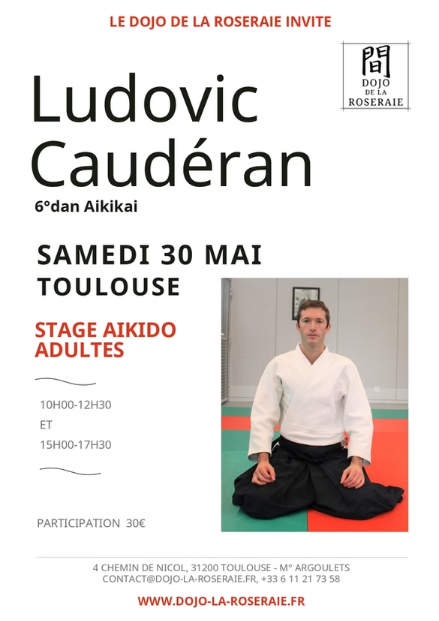
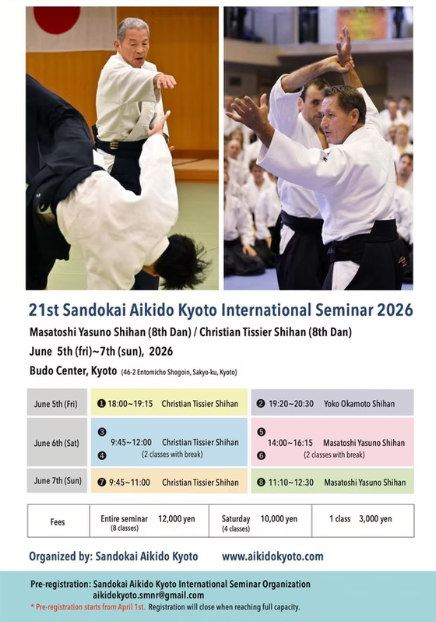
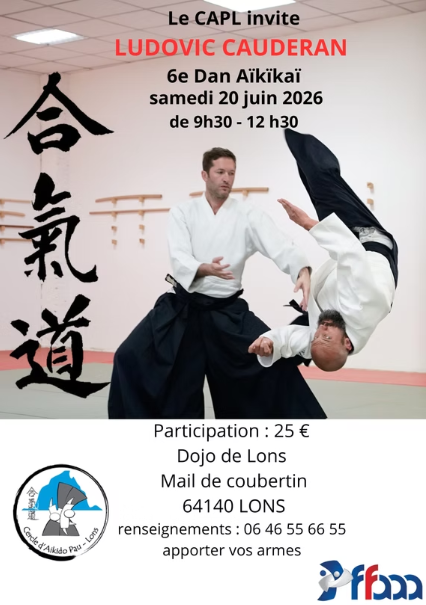
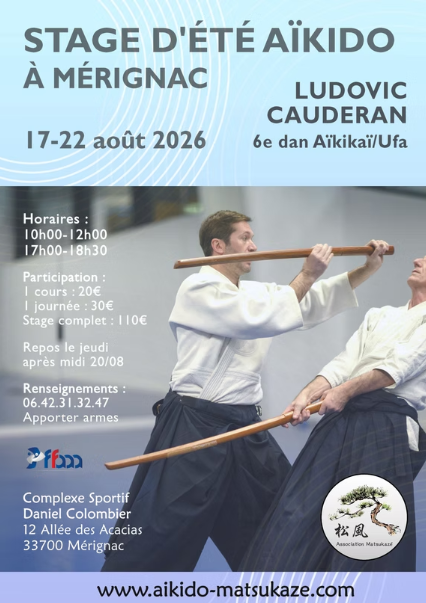
From the 1st to the 5th Dan, these are reserved for seasoned practitioners, capable of teaching and passing on their knowledge. The 6th to 8th Dan are awarded only to masters of their discipline, with an even deeper understanding of the practice. Finally, the 9th and 10th Dan are almost legendary grades — the latter having been officially awarded only once in the entire history of Aikido — recognized by the Aikikai, the official Aikido organization.